Brooklyn, New York
Selling a home in Park Slope
Brownstones in the historic district, co-ops off Prospect Park West and new condos on Fourth Avenue each sell on different terms.
Get my free home valueAbout Park Slope
Brownstones, Prospect Park and a web of subway lines
Park Slope climbs from Fourth Avenue up to Prospect Park West, with Prospect Park along its eastern edge and Grand Army Plaza at the north. Fifth and Seventh Avenues are the main shopping streets. Transit is strong: the F and G stop at 7th Avenue, 15th Street-Prospect Park and 4th Avenue-9th Street, the R runs under Fourth Avenue, the 2 and 3 stop at Grand Army Plaza, and the B and Q stop at 7th Avenue on Flatbush Avenue.
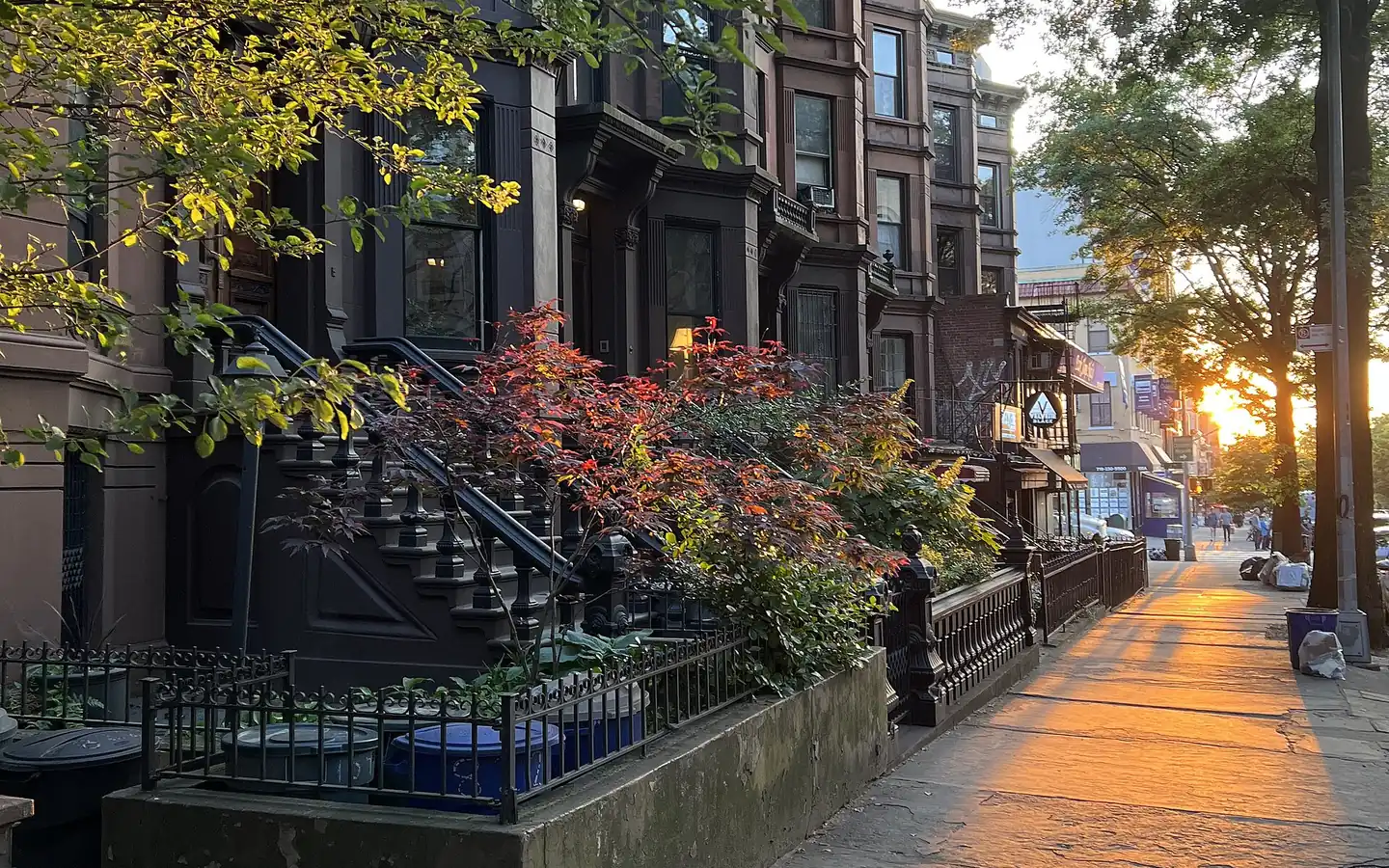
Much of the neighborhood is protected by the Park Slope Historic District. The Landmarks Preservation Commission expanded it in 2016 with Extension II, which added 292 buildings around the northern part of the original district, mainly single-family row houses and flats buildings built between the mid-19th and early 20th centuries.
Homes in Park Slope
What sellers should know
Park Slope's core is brownstone and limestone row houses, many split into a few units or converted to co-ops and condos, plus prewar apartment co-ops near the park and newer condo buildings along Fourth Avenue. In the historic district, exterior changes need Landmarks approval, which buyers planning a renovation weigh carefully. Co-op sellers need board approval for their buyer, and townhouse sellers should know their legal unit count.
Know your landmark status
Check the LPC map to see if your building is in the Park Slope Historic District or an extension. Buyers planning new windows, a rear addition or a roof deck will ask.
Document original details
Stoops, cornices, parlor-floor woodwork and plaster are what Park Slope buyers pay for. Photograph them and note any restoration.
Confirm the unit count
Many brownstones have been converted over the years. Make sure the certificate of occupancy matches how the house is used before you list.
Prepare co-op and condo paperwork
Co-op board packages and condo offering documents take time to assemble. Have them ready so a buyer's lender is not held up.
Free · No obligation
Selling in Park Slope?
Tell us about your property. A licensed agent will look at recent sales near you and call with a realistic price range and a plan — free and without obligation.
- 01
Tell us about your home
Address, size and your timing. Two minutes, no account needed.
- 02
We study real sales nearby
A licensed agent compares recent sales and current competition near you — not an automated guess.
- 03
Talk it through, no pressure
You get a realistic price range and a plan. Whether you list with us is entirely your call.
Thank you — we have your request.
A licensed agent from Senator Realty will call you shortly. Prefer to talk now? Call (718) 569-2020.
Selling a home in Park Slope: questions
Can a buyer add a backyard cottage behind a Park Slope brownstone?
Not in a historic district. The Department of Buildings says backyard ancillary dwelling units are not permitted in historic districts, though attic and basement units follow separate rules.
Do I need Landmarks approval before I sell?
No approval is needed to sell, but any unpermitted exterior work done in the historic district can come up during the buyer's review. Clear it up with the Landmarks Preservation Commission early.
What does the mansion tax mean for my buyer?
New York State charges an additional 1% tax on residences that sell for $1 million or more, and it is paid by the buyer. The state also adds more tax on New York City residential sales of $3 million or more.
Official sources for Park Slope sellers
- LPC press release: Park Slope Historic District Extension II (2016)
- NYC Landmarks Preservation Commission: landmark maps
- NYC DOB: Ancillary Dwelling Units (Local Laws 126/127)
- New York State real estate transfer tax
- NYC Real Property Transfer Tax (RPTT)
- NYC Department of Buildings